
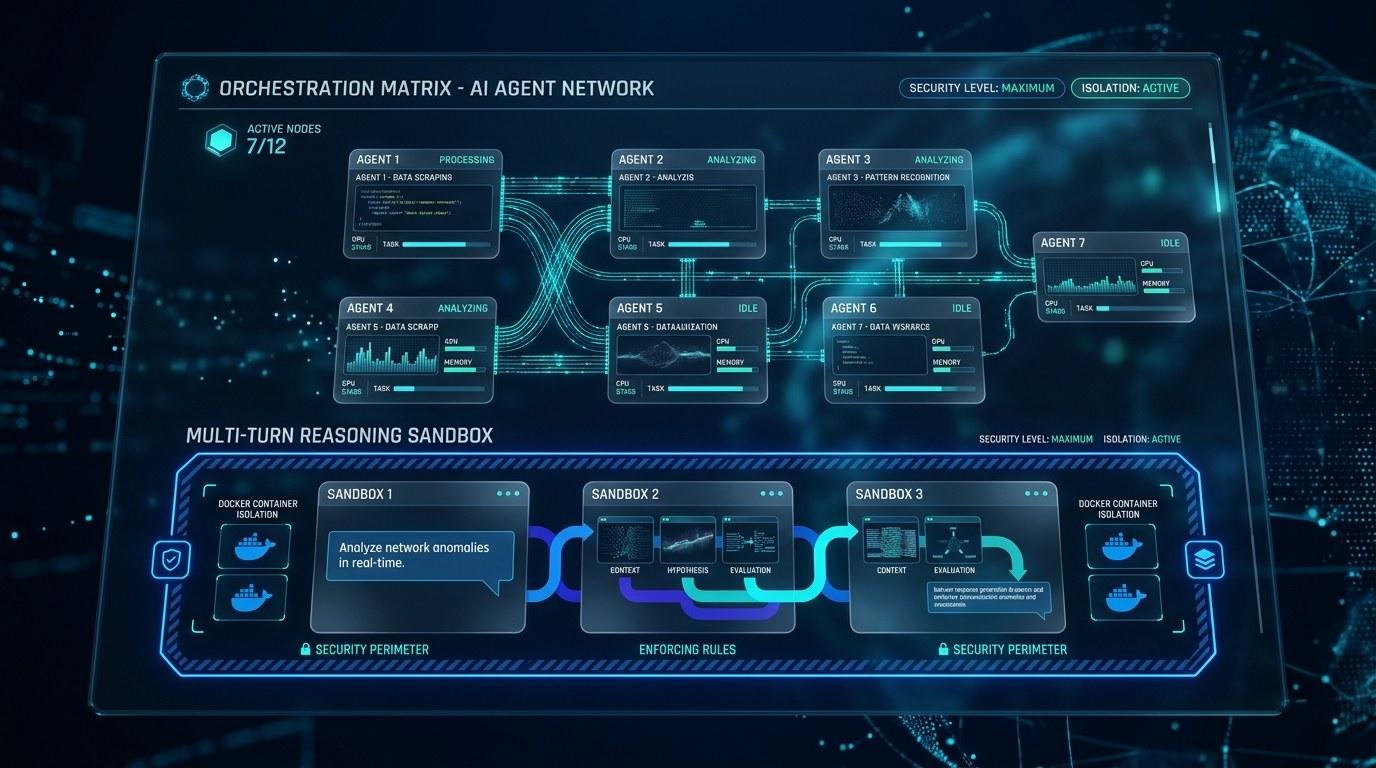
Project Overview
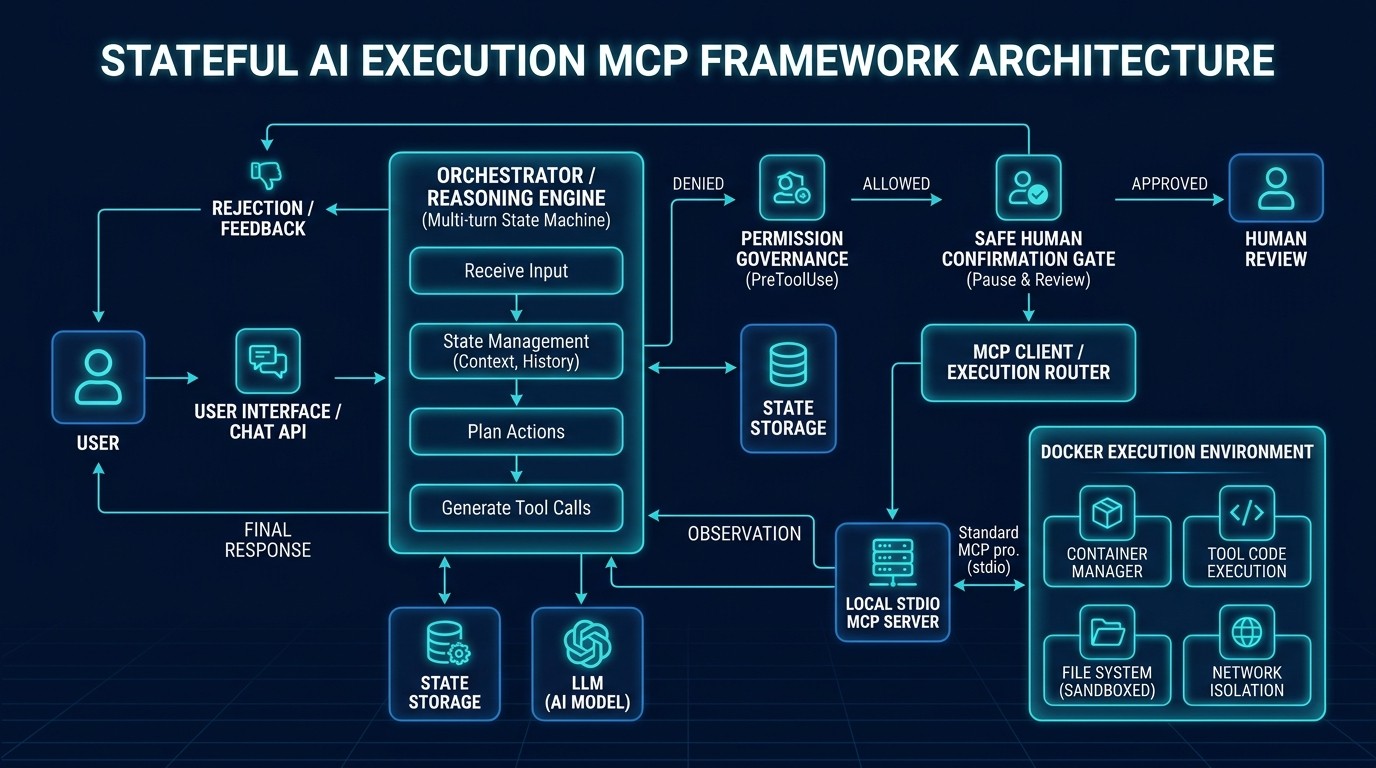
An enterprise-grade stateful Model Context Protocol (MCP) agent framework connecting developer IDEs with isolated Linux execution runtimes. Operating over local stdio, the framework coordinates multi-turn agent reasoning from hypothesis formation to Docker workspace provisioning, difficulty trial benchmarking, and platform dispatch. Built upon a strict Zero-Credential-Leakage policy, it enforces dynamic permission governance via PreToolUse hooks and cryptographic checksum verification before any remote execution, establishing an ironclad security perimeter for enterprise agentic engineering.
Challenges & Pain Points
Uncontrolled AI Execution Risks
Autonomous agents given shell execution rights could run destructive commands or access unauthorized network ports without human visibility or approval.
State Loss in Long-Running Reasoning
Standard stateless agent tools lost context between turns, requiring re-running expensive initialization and causing inconsistency across multi-hour debugging sessions.
Complex Local vs. Remote Environment Mismatches
Differences in file permissions, line endings (CRLF vs. LF), and container setups between local Windows/WSL2 development and remote execution clusters caused frequent deployment failures.
Our Solution
PreToolUse Security Hook & Approval Gate
Implemented runtime interceptors in the IDE plugin requiring cryptographic checksum previews and explicit human authorization before executing any network or remote commands.
Zero-Credential-Leakage Architecture
Ensured that no API keys, platform cookies, or bearer tokens are ever persisted to disk, environment files, or git commits, operating exclusively with ephemeral session permissions.
Stateful Multi-Turn Session Orchestration
Architected an atomic session engine persisting research state, container bindings, and difficulty trials, enabling seamless session handoff across developers and IDE reboots.
Technology Stack
AI Orchestration & Sandboxing Domain Expertise
Secure Agent Tool Governance
Specialized architecture for least-privilege tool access, human-in-the-loop verification gates, and real-time execution audit trails for autonomous systems.
Hybrid WSL2 & Linux Sandboxing
Expert engineering bridging Windows host developer experience with high-performance native Linux container runtimes and volume mount permissions.
Project Highlights
- Stateful Model Context Protocol (MCP) engine connecting IDEs to Linux sandboxes
- Zero-Credential-Leakage design with ephemeral session permissions
- PreToolUse IDE security hooks ensuring mandatory human sign-off on remote actions
- Comprehensive policy compliance across technical specifications